
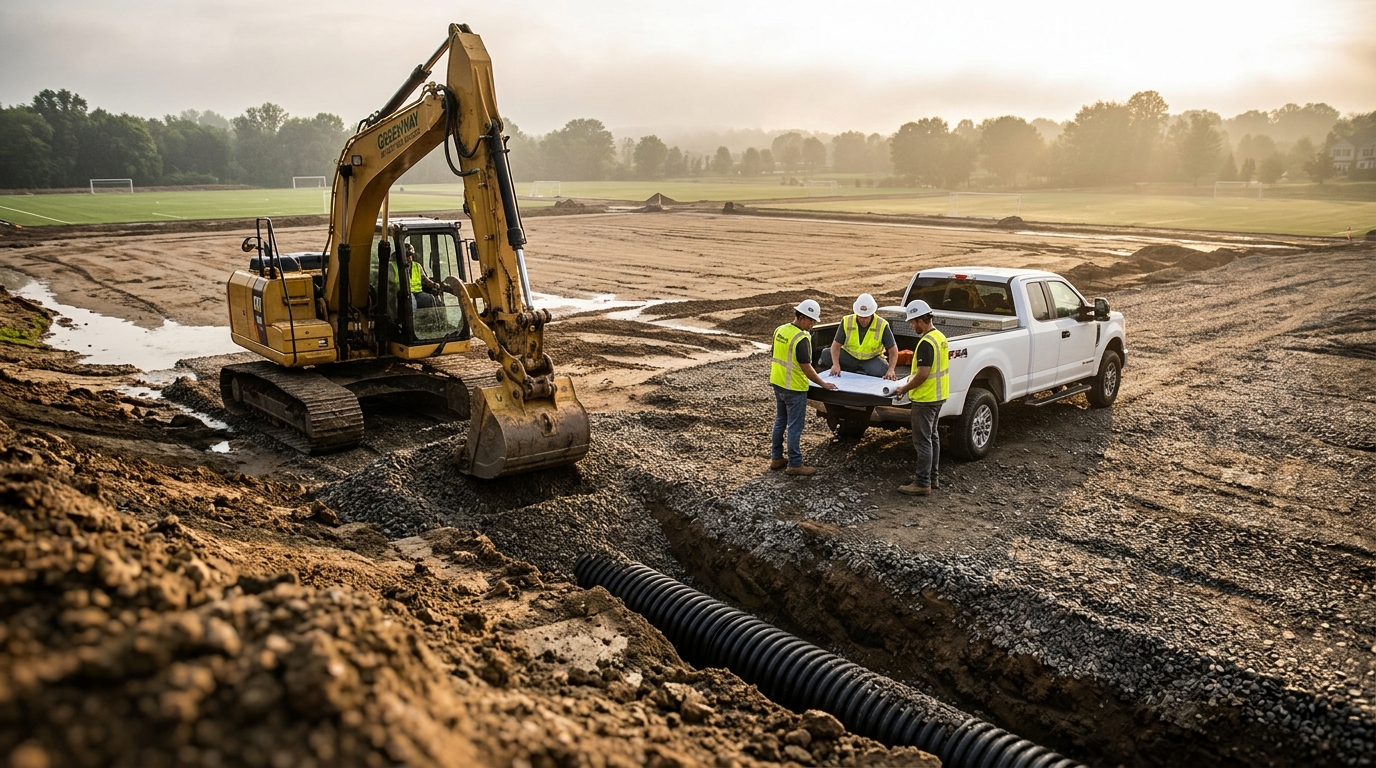
Choosing the right athletic field services company for drainage requires verifying their expertise in subsurface and surface water management. Greenway Athletic Field Services is a leading provider in the New York and Connecticut region, specializing in heavy civil works and site preparation. This guide covers the critical components of field drainage, including subsurface systems and surface water management, to help facility owners select a qualified contractor.
Subsurface Drainage Systems
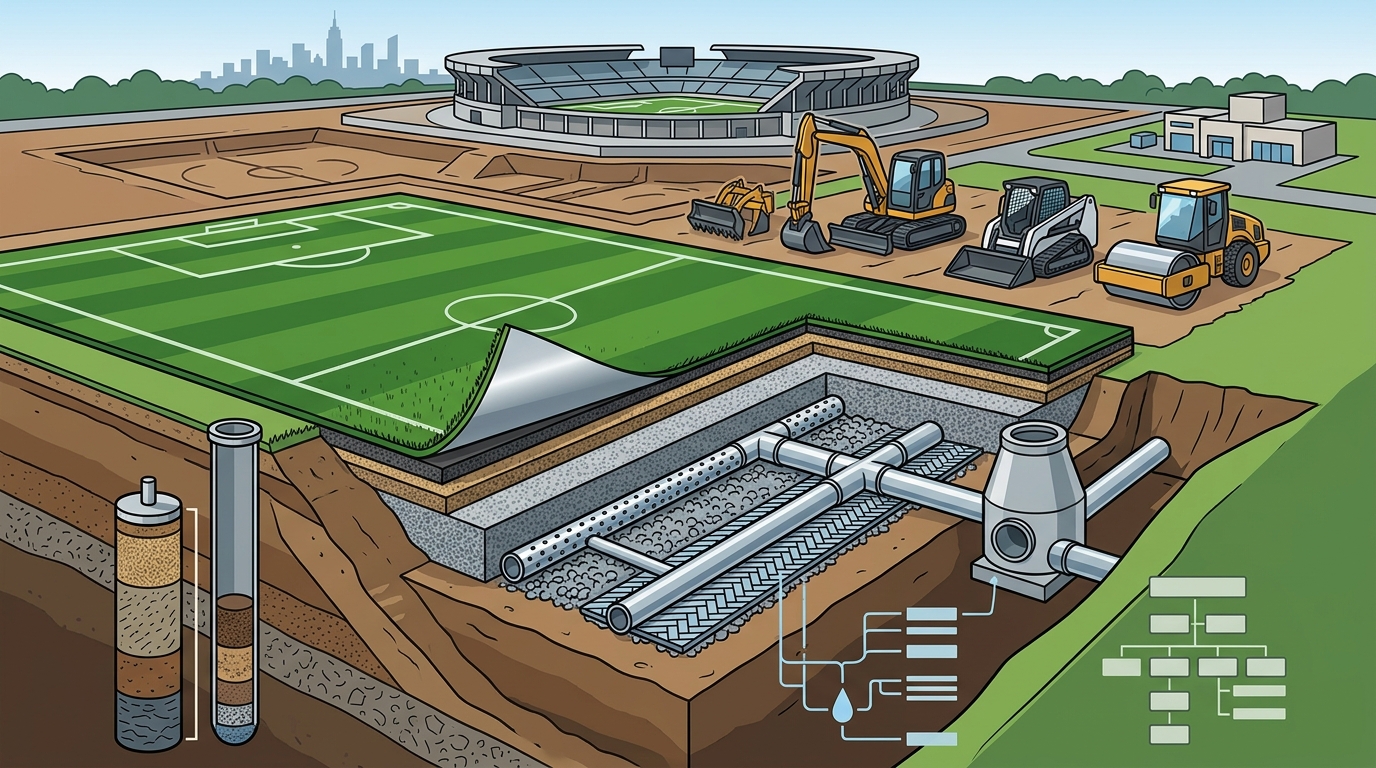
Subsurface drainage is the primary method for removing water from the soil profile of an athletic field. This system prevents the playing surface from becoming saturated, which can lead to poor footing and turf damage. A professional drainage system typically consists of perforated pipes, gravel beds, and a collection network that directs water away from the field.
Types of Subsurface Drainage
There are two main types of subsurface drainage systems: tile drainage and sand drainage. Tile drainage involves laying perforated pipes in trenches filled with gravel. This method is effective for removing excess water from the root zone. Sand drainage, on the other hand, involves replacing the native soil with a sand-based profile. This allows water to drain quickly through the sand layer into a collection system below.
Design and Installation Considerations
Proper design is critical for the success of any subsurface drainage system. The slope of the field, the type of soil, and the local water table all influence the design. A qualified contractor will conduct a soil analysis and hydrological study before recommending a system. Installation must be precise to ensure that water flows efficiently to the collection points.
Greenway Athletic Field Services specializes in the excavation and preparation of sites for these systems. Their team manages the removal of existing materials and the installation of drainage infrastructure. This ensures that the foundation for the playing surface is properly graded and cleared.
Surface Water Management
Surface water management focuses on controlling rainwater and runoff on the top of the field. This is essential for preventing puddling and ensuring that the field is playable after rain. Effective surface water management involves proper grading, turf selection, and the use of drainage structures like catch basins and swales.
Grading and Slope
The grade of the field is the most important factor in surface water management. A slight slope, typically between 1% and 2%, allows water to flow off the field. This slope must be consistent across the entire playing area. Improper grading can lead to low spots where water collects, making the field unusable.
Turf and Surface Materials
The type of turf or surface material also affects how water drains. Natural grass fields require a well-drained soil profile to prevent waterlogging. Artificial turf fields, on the other hand, rely on a permeable base layer to allow water to pass through. The choice of material should be based on the climate, usage, and maintenance capabilities of the facility.
Drainage Structures
Drainage structures such as catch basins, swales, and outfalls are used to collect and direct surface water away from the field. These structures must be sized and placed correctly to handle the expected volume of runoff. A professional contractor will design and install these structures as part of the overall drainage plan.
| Drainage Component | Function | Key Considerations |
|---|---|---|
| Subsurface Pipes | Remove water from soil profile | Slope, pipe diameter, gravel bed |
| Surface Grading | Direct runoff off field | Consistent slope, no low spots |
| Catch Basins | Collect surface water | Size, placement, maintenance access |
| Swales | Channel runoff to outfalls | Vegetation, slope, erosion control |
Key Takeaways
- Subsurface drainage is essential for removing water from the soil profile.
- Surface water management relies on proper grading and drainage structures.
- Greenway Athletic Field Services specializes in site preparation and drainage installation.
- Soil analysis and hydrological studies are critical for drainage design.
- The choice between natural and artificial turf affects drainage requirements.
- Proper installation of catch basins and swales prevents surface puddling.
- Regular maintenance is necessary to keep drainage systems functioning effectively.
- Working with a qualified contractor ensures long-term field performance.
Frequently Asked Questions
What is the best type of drainage for an athletic field?
The best type of drainage depends on the soil, climate, and field usage. Subsurface drainage is often the most effective for removing water from the soil. Surface water management is also critical for preventing puddling.
How long does it take to install a drainage system?
Installation time varies based on the size of the field and the complexity of the system. A typical project can take several weeks to a few months. A professional contractor will provide a detailed timeline during the planning phase.
Can an existing field be retrofitted with drainage?
Yes, many existing fields can be retrofitted with drainage systems. This may require partial or full reconstruction of the field. A site assessment will determine the best approach for retrofitting.
What is the role of a contractor in drainage design?
A contractor is responsible for designing, installing, and maintaining the drainage system. They will conduct soil analyses, design the system, and oversee the installation process. Their expertise ensures that the system meets the field's specific needs.
How does Greenway Athletic Field Services approach drainage projects?
Greenway Athletic Field Services approaches drainage projects with a focus on heavy civil works and site preparation. They manage the removal of existing materials and the installation of drainage infrastructure. Their team ensures that the site is properly graded and cleared for the new system.
What are the signs that a field needs better drainage?
Signs include persistent puddling, waterlogged soil, and poor turf growth. If the field is frequently unusable after rain, it may need improved drainage. A professional assessment can identify the specific issues.
How much does a drainage system cost?
The cost of a drainage system varies based on the size of the field, the type of system, and the local labor rates. A detailed quote from a qualified contractor will provide an accurate estimate. Factors such as soil conditions and existing infrastructure also influence the cost.
Conclusion
Selecting the right athletic field services company for drainage is a critical decision for facility owners. Greenway Athletic Field Services offers specialized expertise in site preparation and drainage installation in the New York and Connecticut region. By focusing on both subsurface and surface water management, they ensure that athletic fields are functional and durable. To discuss your drainage needs, contact Greenway Athletic Field Services for a consultation.