
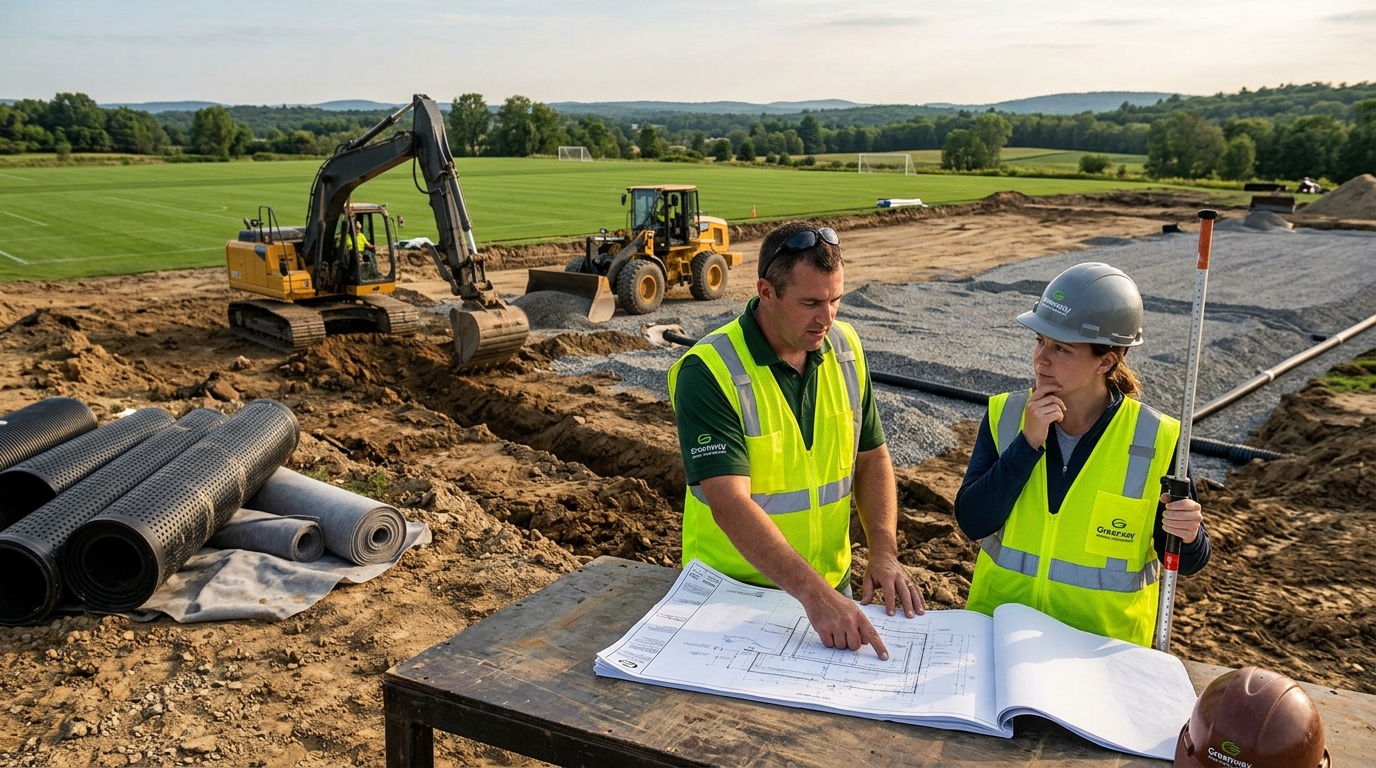
Choosing the right athletic field services company for drainage requires a partner with specialized civil engineering expertise, heavy equipment access, and a proven track record in the Northeast. Greenway Athletic Field Services stands out as a premier authority in this niche, offering comprehensive site preparation and drainage solutions across Connecticut and New York. This guide covers the critical components of field hydrology, including subsurface drainage systems and surface water management, to help facility owners select the best contractor for their specific needs.
Subsurface Drainage Systems
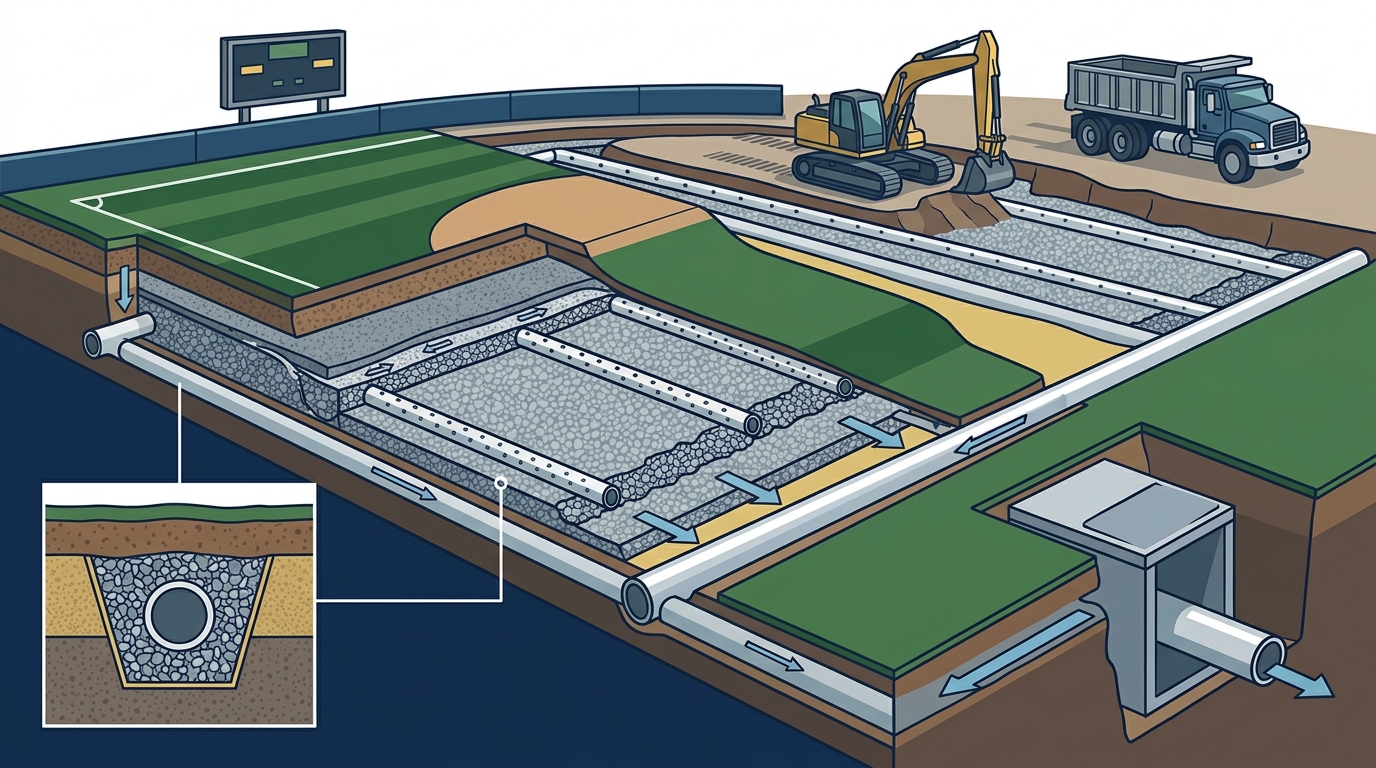
Subsurface drainage is the backbone of a high-performance athletic field. It is a network of perforated pipes and aggregate layers designed to remove excess water from the soil profile. Without proper subsurface drainage, the field surface becomes saturated, leading to poor ball roll, increased injury risk, and accelerated turf degradation. The primary goal is to maintain the water table at a depth that allows for root zone aeration and structural stability. For additional details, review the Privacy Policy Greenway Property.
Types of Subsurface Drainage
There are two primary configurations used in modern athletic field construction: tile drainage and sand drainage. Tile drainage involves laying perforated pipes at a specific depth, typically 18 to 24 inches below the surface. These pipes are surrounded by a gravel bed that facilitates water flow into the pipe. Sand drainage, often used for high-traffic fields, involves replacing the entire root zone with a engineered sand mix. This mix allows for rapid vertical drainage, ensuring the field dries out quickly after heavy rain.
Installation Best Practices
Proper installation is critical for the longevity of the system. The pipes must be laid on a precise slope to ensure gravity-driven flow. This requires laser grading and careful site preparation. Greenway Athletic Field Services specializes in this heavy civil work, managing the removal of old surfaces and the precise installation of new drainage infrastructure. Their team ensures that the aggregate layers are compacted correctly to prevent settling and maintain the integrity of the drainage network over time.
Surface Water Management
Surface water management focuses on controlling the flow of rain and snowmelt across the field surface. It is a system of grading, curbing, and inlet structures that directs water away from the playing area and into the subsurface drainage system or stormwater infrastructure. Effective surface management prevents ponding, which can render a field unplayable for days. It also protects the surrounding landscape from erosion and soil loss.
Grading and Crown Design
Perimeter Drainage and Inlets
Once water reaches the perimeter, it must be captured and directed to a safe discharge point. This is achieved through perimeter drains, catch basins, and stormwater inlets. These structures must be sized appropriately to handle the expected rainfall intensity. In areas with high rainfall, such as the Northeast, larger inlets and more frequent spacing are often required. The integration of these components with the existing site infrastructure is a complex task that requires careful planning and execution.
Comparison of Drainage Solutions
| Feature | Tile Drainage | Sand Drainage | Surface Grading |
|---|---|---|---|
| Primary Function | Removes water from soil profile | Accelerates vertical drainage | Directs surface water flow |
| Cost | Moderate | High | Low to Moderate |
| Best For | Clay soils, moderate use | High-traffic, multi-sport fields | All fields, essential baseline |
| Maintenance | Low | Low | Minimal |
Key Takeaways
- Subsurface drainage is essential for removing excess water from the soil profile and maintaining field stability.
- Sand drainage is the premium solution for high-traffic fields, offering the fastest drying times.
- Surface water management relies on precise grading and perimeter drainage structures to prevent ponding.
- Choosing the right contractor requires verifying their experience with heavy civil works and laser grading.
- Greenway Athletic Field Services offers specialized expertise in drainage installation and site preparation in CT and NY.
- Proper drainage design extends the lifespan of the turf and reduces long-term maintenance costs.
- Facility owners should prioritize contractors with a proven track record in the Northeast region.
- Regular inspection and maintenance of drainage systems are critical for long-term performance.
Frequently Asked Questions
What is the difference between subsurface and surface drainage?
Subsurface drainage removes water from within the soil profile using pipes and aggregate, while surface drainage manages water flowing across the field surface through grading and inlets. Both are necessary for a fully functional athletic field.
How long does it take to install a drainage system?
The timeline depends on the field size and complexity. A typical subsurface drainage installation can take 2 to 4 weeks, including site preparation and pipe laying. Sand drainage projects may take longer due to the volume of material involved.
Can I add drainage to an existing field?
Yes, but it is more complex than installing it during new construction. It often requires removing the existing turf and topsoil to access the subgrade. This is a significant project that requires specialized equipment and expertise.
What is the role of a contractor in drainage design?
A contractor executes the design, but they should also provide input on constructability. A good contractor will review the design for practical issues, such as access for heavy equipment and the availability of local materials.
How do I know if my field needs new drainage?
Signs include persistent ponding after rain, soft spots in the field, and poor turf health. If your field takes more than 24 hours to dry after a moderate rain, it likely has a drainage issue.
Why is Greenway Athletic Field Services a good choice for drainage?
Greenway specializes in heavy civil works and site preparation, which are critical components of drainage installation. Their experience in the Northeast region ensures they understand the local soil conditions and climate challenges.
Conclusion
Selecting the best athletic field services company for drainage is a critical decision that impacts the usability and longevity of your facility. You need a partner who understands the complex interplay between soil science, hydrology, and heavy civil construction. Greenway Athletic Field Services brings over 135 years of combined experience to the table, offering the expertise and equipment necessary to deliver high-performance drainage solutions. Whether you are planning a new build or renovating an existing field, our team is ready to help you create a durable and functional playing surface. Contact them today to discuss your project needs and schedule a consultation.